


From Behind the Scenes to In the Room: My First Time on Set with Jeff Hancher & Benny Fisher
June 17, 2025
I’m Nes, Benny’s Marketing Director, and usually the person behind the scenes helping bring all the brand content to life. But this week, I stepped out from behind the laptop and into the room.
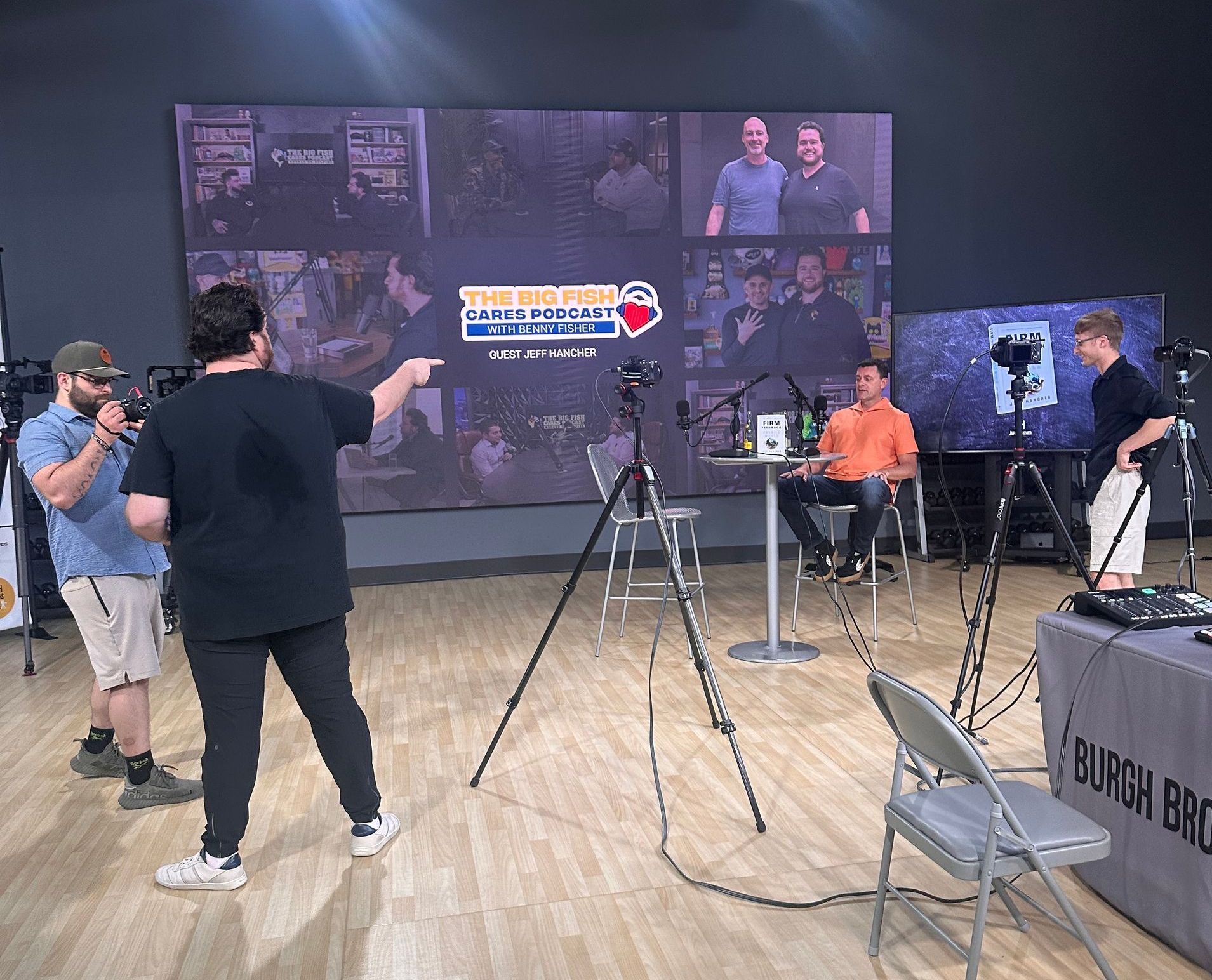
I flew into Pittsburgh to work with Benny in person for the first time since August. We had content to plan, creative to shape, and new ideas to bring to life. But what I didn’t expect was to walk into a moment that would stay with me long after the cameras stopped rolling.
That afternoon, Jeff Hancher walked onto set to record an episode of The Big Fish Cares Podcast.
I knew Jeff’s background. His leadership coaching, his military service, his Fortune 500 success. But I didn’t know the story behind all that. Not the way he told it.
From the moment he sat down, something shifted in the room. He spoke with a depth and clarity that made everything else fade into the background. He talked about growing up in poverty. About watching his mom cut her medication in half just to make it last. About holding her during seizures. About wondering if he’d ever escape the weight of where he came from.
And he didn’t just say it. He felt it. So did we.
I’ve worked on podcasts before, but this was my first time in the room as one was being recorded. I thought I’d be focused on angles, lighting, social content. But instead, I found myself locked into every word. There were moments when I had actual goosebumps. You could hear it in the silence, in the weight of the pauses. It was real. And it was rare.
But Jeff didn’t just speak about struggle. He spoke about leadership with a kind of intentionality that stuck with me. He talked about the power of culture. How the environment we create can either crush people or call them into something greater. He talked about feedback, mentorship, and what it means to show up for others with strength and softness.
He told stories of mentors who taught him how to lead. Not just in theory, but in practice. Who helped him find his voice, carry himself with confidence, and rise without forgetting where he came from.
And when he talked about losing his mother — the heartbreak, the timing, the unraveling that almost followed — it didn’t feel like a story. It felt like grief in real time. And then came the turning point. One leader stepped in and refused to let him quit.
That moment hit me. Hard.
It reminded me why I do this work. Why stories matter. Why leadership, when done right, isn’t just about strategy. It’s about people.
Jeff’s new book, Firm Feedback in a Fragile World, goes even deeper into these lessons. It’s a book about leadership, yes. But also about healing, purpose, and what it means to lead from experience, not ego.
If you’ve ever felt unseen, unsure, or like your story disqualifies you, listen to this episode. Then read Jeff’s book. Let it remind you that some of the most powerful leaders are the ones who had to fight their way forward and chose to bring others with them.
�55356;�57241; Watch the full episode with Jeff Hancher on The Big Fish Cares Podcast
Now available on YouTube, Spotify, and Apple Podcasts.
�55357;�56536; Grab Jeff’s book, Firm Feedback in a Fragile World, here → https://www.firmfeedbackbook.com/
And if you ever get the chance to be in the room—take it. Some stories deserve to be felt up close.
Whether you're driving, building, or reflecting — catch every episode of The Big Fish Cares Podcast on your favorite platform.
Where Real Conversations Live
Looking for more? Start here.
By Benny Fisher
•
August 20, 2026
I walked into a leadership meeting with a client's team about a year into working with them. Twelve people around the table. Everyone had a status update. Everyone gave their status update. An hour later, we had a shared understanding of what had already happened and nothing had been decided. That is not a meeting. That is a group status email that required everyone to show up in person. WHAT A REAL LEADERSHIP MEETING DOES There is a version of the weekly leadership meeting that most teams never experience. One where the issues that have been bouncing around in people's heads all week get named out loud, get owned by the right person, and get resolved before they become next week's bigger problem. That version requires three things that most teams skip. First , the issues have to be named honestly, not diplomatically. Diplomatic issue identification produces incomplete lists. What you are actually worried about has to be said in the room, not saved for the parking lot conversation after. Second , they have to be solved at the right level. Most of the time the founder is not the right person. A mature team asks who is actually closest to this problem, and puts the solve there. Third , the priorities have to stay honest. Most leadership teams do not need more ambition. They need fewer things on the list, held with more discipline. When every item is labeled important, people quietly stop believing anything actually is. WHAT CHANGED WHEN THEY CHANGED THE MEETING We rebuilt the format with that client. Same people, same time slot, different structure. A short pulse on the numbers, a review of what moved and what stalled on the real priorities, then time to identify and solve the actual issues, not report on them. Three things happened in the first month. The founder stopped carrying half the company's unresolved issues home over the weekend. The team started solving things without waiting to be told. And the leadership conversations shifted from status reporting to real decision-making. The meeting did not fix the business. It created the conditions for the team to fix the business themselves. THE QUESTION TO BRING TO YOUR NEXT MEETING Before your next leadership meeting, write down the three things you are most worried about in the business right now. Not the agenda items. The real things. Then ask: do these get named and solved in our weekly meeting, or do they stay in my head until they become a crisis? If the answer is your head, the meeting needs to change. A business that still depends on the founder's nervous system to hold its unresolved issues has not yet built a real leadership team. It has built a group that reports to a person. What is sitting in your head right now that belongs in a room with your team? Prepared by Benny Fisher | Visionary Navigator | bennyfisher.com