





You can delegate the P&L, the hiring, the whole calendar. The care comes back every time, and it moves up to you. The founder's real job.

The ten disciplines from Gino Wickman and Rob Dube, handed to a friend on a back porch in July. Where I argue with the order, and the one discipline a man can hide inside.
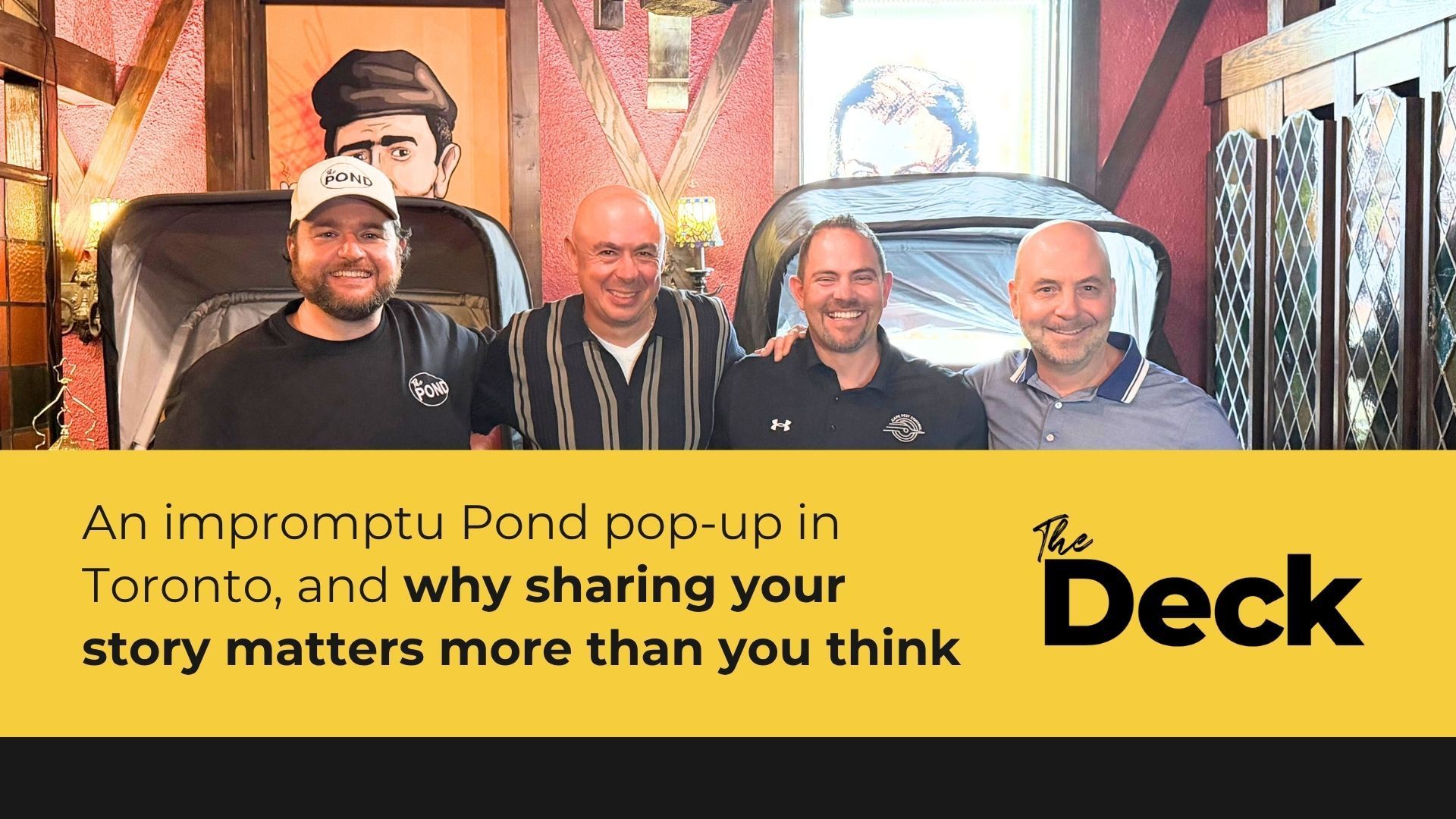
You never know what's going to happen at the intersection of one point in time and a few people willing to tell the truth.
You can delegate the P&L, the hiring, the whole calendar. The care comes back every time, and it moves up to you. The founder's real job.
The ten disciplines from Gino Wickman and Rob Dube, handed to a friend on a back porch in July. Where I argue with the order, and the one discipline a man can hide inside.
You never know what's going to happen at the intersection of one point in time and a few people willing to tell the truth.
I walked into a leadership meeting with a client's team about a year into working with them. Twelve people around the table. Everyone had a status update. Everyone gave their status update. An hour later, we had a shared understanding of what had already happened and nothing had been decided. That is not a meeting. That is a group status email that required everyone to show up in person. WHAT A REAL LEADERSHIP MEETING DOES There is a version of the weekly leadership meeting that most teams never experience. One where the issues that have been bouncing around in people's heads all week get named out loud, get owned by the right person, and get resolved before they become next week's bigger problem. That version requires three things that most teams skip. First , the issues have to be named honestly, not diplomatically. Diplomatic issue identification produces incomplete lists. What you are actually worried about has to be said in the room, not saved for the parking lot conversation after. Second , they have to be solved at the right level. Most of the time the founder is not the right person. A mature team asks who is actually closest to this problem, and puts the solve there. Third , the priorities have to stay honest. Most leadership teams do not need more ambition. They need fewer things on the list, held with more discipline. When every item is labeled important, people quietly stop believing anything actually is. WHAT CHANGED WHEN THEY CHANGED THE MEETING We rebuilt the format with that client. Same people, same time slot, different structure. A short pulse on the numbers, a review of what moved and what stalled on the real priorities, then time to identify and solve the actual issues, not report on them. Three things happened in the first month. The founder stopped carrying half the company's unresolved issues home over the weekend. The team started solving things without waiting to be told. And the leadership conversations shifted from status reporting to real decision-making. The meeting did not fix the business. It created the conditions for the team to fix the business themselves. THE QUESTION TO BRING TO YOUR NEXT MEETING Before your next leadership meeting, write down the three things you are most worried about in the business right now. Not the agenda items. The real things. Then ask: do these get named and solved in our weekly meeting, or do they stay in my head until they become a crisis? If the answer is your head, the meeting needs to change. A business that still depends on the founder's nervous system to hold its unresolved issues has not yet built a real leadership team. It has built a group that reports to a person. What is sitting in your head right now that belongs in a room with your team? Prepared by Benny Fisher | Visionary Navigator | bennyfisher.com

Do the exercise. Not in your head. On paper, this week. Pick the age. Write the five. Write the obituary your kid reads. Then extend it, and write what you would do with the extra time.
I've sat across from a lot of business owners who are working toward an exit.

Three rooms that taught me how to do this, two men who are gone, and a backyard that fills up on Thursday. There's a gift sitting in my house right now that I can't tell you about yet. It's for Thursday. Every Pond member who walks into that backyard is getting one. There will be plenty of other people there too, friends, families, folks who are just curious about what we're building, and I'm glad about every one of them. But this piece is for the members. I've been working on it quietly for a while and I keep walking past it and stopping. I'll tell all of you what it is next week, after everybody has gone home. Right now I just want to sit with how this feels for a minute. I didn't make it myself. I commissioned my friend Brad Dalton. Brad makes gifts out of clay, under the name Clay and Spirit. Gift-maker is a real job and one of the better ones I know of. Watching him build this thing was its own gift. He made it with joy. I mean actual joy, the kind you can see in a man's hands while he works. There's video. You'll get the video. The barbecue is sold out. We never sold a ticket. We just ran out of room. Members are coming. Friends are coming. People who are still deciding what they think about what we're building are coming. Spouses, kids, the whole thing. Somebody is going to be in the pool by noon and somebody else is going to be at the fire pit at eleven at night, and I already know exactly who both of those people are. I'm sitting here on a Saturday going over the list and I don't have great words for what I feel. So let me back into it. HOW I LEARNED TO DO THIS I believe we were built for each other. Not in a greeting card way. I believe God made every one of us a masterpiece and then made us so that we can't quite see our own work without somebody else standing in the room. I think that's on purpose. I've felt called to be the guy who gets people in the same room since long before I had a company to hang it on. It might be the only real purpose I've ever had. But the way I do it, I did not come up with any of that. I got taught. By three rooms and by a couple of men who are not here anymore. The first was VeeFriends. I had a Hangout Hawk, so a group of us would get on Zoom together, and then we'd end up in the same room in person now and then. I also had a Gift Goat, which meant Gary would randomly surprise you and drop something at your door. No occasion. No reason. Just a box on the porch. I remember thinking, man, this is really cool. This is the way it's done. Then I joined Steve Sims and the Distillery. Day one, before I had done a single thing to earn it, a thoughtful gift showed up with a handwritten letter. Day one. I knew right then that Steve was different. Then I went to a Speakeasy, and it was not a hotel conference room with a projector and bad coffee. It was just cool. Cool in a way I had never seen anybody pull off. Then I met John Ruhlin. This guy gave gifts for a living. Wrote the book on it, Giftology. John made you feel like you were his best friend inside of five minutes, and the wild part is that he made a few hundred people feel exactly that way and every one of them was telling the truth. John died in August of 2024. It's two years this week. Steve died last July. Neither one of them will be in my backyard on Thursday. Both of them will be. THE PART I HAD TO BE TAUGHT TWICE The other room that got me here is the 10 Disciplines with Gino Wickman and Rob Dubé. Couple years in now. That's where I stopped treating peace like a reward you collect after the business finally behaves, and started treating it like something you build on purpose, at the same time as everything else. Here is what I came out of all of it believing. Every driven entrepreneur is called to relationship. Called to connection. Called to generosity. Called to impact. Called to peace. Not one of those instead of the others. All of it, at once, on purpose. That's what The Pond came out of. Not a business plan. A pile of rooms that other people built for me, and the feeling that I owed somebody the same thing. WHAT I HAVE TO WATCH ON THURSDAY Old Benny runs this barbecue from the kitchen. Old Benny is checking the ice, counting chairs, watching the driveway, making sure the food trucks are on time, and he gets to the end of the night having hosted a great party he was never actually at. I know that guy. I still am that guy some days. So the thing I'm telling myself all week is simple. Be still. Stay in the moment. Let it be what it is. The gift is done. The people are coming. There is nothing left to manage. Whether I actually pull that off is a different post. ONE MORE THING We hit capacity this year, which still does not feel real to me. If you wanted to be there and could not get in, tell me. I'll put you on the list for next year, and next year we'll figure out how to make more room. Here is what I keep landing on. Experiences rock. Not a feed, not a nice email, not a well-designed announcement. A thing that actually happens to people, in a place, with other people in it. That is what Gary and Steve and John gave me, and it is the only thing I know how to hand back. But the thing I actually want to leave you with is this, and I want you to sit with it a second longer than is comfortable. Somebody built a room for you. Gary built one. Steve built one. John built one. Gino and Rob built one. Somebody, somewhere, made space for you before you had done anything to deserve it, and it changed the direction you were pointed. Have you built one for anybody yet? Not a group chat. Not a follower count. A room. With a door you hold open and a table you set on purpose. Who is sitting outside of yours right now, waiting on you to notice?
Somebody has to say it before the first of the month talks you out of what you built. July 31st my phone would not stop going off. One number came in. Then another. Then another. Four of the five roofing contractors I help navigate texted me what they closed for the month, and every one of them was just over a million dollars in a single month. I sat there at my kitchen table grinning like an idiot, texting back one hand at a time, proud of them in a way that is hard to explain to people who have never watched a founder claw his way to that line. The next morning I opened Facebook and the first post I read said every month starts at zero. I don't believe that. I don't believe it even a little. I used to. I lived it. Back in my selling days the first of the month was a hollow feeling in my stomach. Doesn't matter what you did in May. Board's blank. Go get it. And when I owned a roofing company selling something transactional instead of recurring, the feeling followed me right up the ladder into the owner's seat. The number resets, so the man resets with it. Here's what I've come to. Starting at zero is not humility. It's amnesia. Because the scoreboard is not the business. Your brand did not reset on August 1st. Your systems did not reset. Your skills did not reset. Your people did not walk in this morning dumber than they walked out last night. Every customer you touched last month still knows your name and still has a neighbor. Even the football thing gets used backwards. Guys love that line, last Friday's win doesn't give you a touchdown this Friday. Sure. The game resets. The season does not. The record does not. The seeding does not. The belief in that locker room that they know how to win, that absolutely does not. Nobody hands you seven points. Everybody hands you a program. The zero mindset feels hungry. That's why it sells. It sounds like the guy saying it is more disciplined than everybody else. What it actually does is erase the only thing that separates owning a business from working a commission job, which is compounding. If your January truly has no advantage over your December after ten years, you don't own a company. You own a job with your name on the truck. And I think there's something underneath it that nobody says out loud. Zero is a hole. When you start the month in a hole, you spend thirty days climbing out of it. That's fear driving. That's money trauma with a motivational filter on it. I know it because I ran on it for years and I was good at it, and being good at something that's eating you is the most dangerous place a founder can live. What I'm working on, and I mean currently working on, not conquered, is running toward something instead of filling a hole. Love instead of fear. It's slower to build and it doesn't spike the same way. Fear gets you a great Tuesday. Love gets you a great decade. The first of the month, before I look at a single number, I try to be still long enough to be grateful for what carried over. Not as a soft opening. As accurate accounting. God already knew what last month was going to hold, and He knows what this one holds, and I don't have to strain against the calendar to prove I deserve to be here. Old Benny would have opened the dashboard at 6:45am on August 1st with his jaw tight. Present Benny still catches himself reaching for the phone before he's even out of bed. Both of those are true today. I'm more there than I've ever been and I'm still catching it. So before you post about the blank scoreboard, ask yourself the honest version. Are you starting at zero, or did you just never build anything that compounds? What did last month leave behind that you haven't bothered to count? And what exactly are you running toward, or are you just running from the hole? Every month is a fresh chance. It's just not a blank one. Not even close. See you in The Pond .

I work with a roofing company owner who had a nagging feeling about his sales team. The numbers weren't bad. Close rate was acceptable. Average ticket was holding. But something wasn't landing and he couldn't name it. I told him to get in the truck. There's a limit to what a dashboard can tell you about a sales team. It shows outcomes. It doesn't show the tone of voice when the homeowner asked about financing. It doesn't show the awkward pause after price was mentioned. It doesn't show the rep who's technically following the process but emotionally checked out the moment he sensed resistance. Those things decide the sale. And they only show up when you're in the room. WHY LEADERS STOP RIDING ALONG At some point, most sales leaders get promoted out of the truck. They move into a role that's more reporting and less field. That's appropriate. But somewhere in that transition, they stop seeing the real thing and start trusting the reported version. The reported version is always cleaner than the real thing. What I see in ride-alongs is usually different from what the scorecards show. Reps who look great on paper asking the wrong questions. Reps who look average on the numbers but revealing real gifts when a genuine customer is in front of them. Habits nobody coached because nobody saw them. Small moments of disconnection that, over a thousand appointments, become a meaningful leak in the business. You can't coach what you can't see. WHAT A RIDE-ALONG ACTUALLY REVEALS When I ride along with a team, I'm not looking for someone to correct. I'm looking to understand. What's the energy like before the homeowner opens the door? Does the rep do any preparation? Is he thinking about this specific customer or running his standard routine? When the homeowner shares something personal, does he pause and acknowledge it, or move straight to the next question on the list? Those details tell me more about the sales culture than any report ever could. One of my clients changed his entire coaching approach after two days of ride-alongs. Not because he found a problem, but because he found a gift. One of his newer reps had a natural ability to slow down and really listen in a way the senior reps had lost. That insight came from being in the truck, not from reviewing the CRM. HOW TO START If you run a sales team and you haven't been on a ride-along in the last 30 days, that's where to start. Not to inspect. To understand. Ride with your best rep first. Then your newest. Then the one you're unsure about. Give yourself one day. You will learn something that no report has been able to tell you. The numbers show you what happened. The ride-along shows you why it happened. There's a difference between knowing your team's results and knowing your team. Both matter. You only get the second one by showing up. So when's the last time you got in the truck? If this article resonated with you, explore BennyFisher.com
At a our recent Pond community founders session, I asked twelve founders to write down their top priorities right now. Business priorities. The things they're actively working to move forward. The average answer was eight. One person had eleven. Nobody had fewer than five. I'm not throwing stones. I've been that person. At one point I had so many priorities on my list that I carried it everywhere and accomplished almost nothing on it. The list made me feel productive. The results told a different story. Here's what I've observed from working alongside home service entrepreneurs from $3M to $20M: the busiest people in the business are often the ones moving the least. Not because they lack drive. Because they've spread their energy across too many fronts and the force behind each one becomes thin. The math doesn't work in your favor. Eight priorities means you're giving roughly 12% of your attention to each one. Important things get that 12%. Urgent things steal it. And at the end of the quarter, you look up and realize you've made incremental progress on everything and real progress on nothing. WHAT KEY PRIORITIES TEACHES US When I work with clients inside their operating rhythm, we talk about their KEY PRIORITIES. The three to five things that, if you move them in the next 90 days, will make the biggest difference to the business. Not twenty things. Not ten. Three to five. The constraint is the point. When you force yourself to name the three things that matter most, something important happens. You stop hiding behind the list. The low-priority items that felt urgent start looking like distractions. The important work that kept getting pushed down finally surfaces. One of my clients in roofing had been "working on" their hiring process for over a year. It was always on the list. But when we sat down and made it a KEY PRIORITY, with a clear outcome and a weekly check-in, it moved in 45 days. Not because they suddenly found more time. Because they finally decided it was real. Deciding something is real means making something else wait. That's the part most founders resist. THE COST OF INFINITE PRIORITY When everything is a priority, your team doesn't know what to protect. They're watching you, taking their cues from where you spend your attention. If you're scattered, they'll be scattered. If you keep pivoting, they'll stop trusting the plan. Clarity is a form of leadership. When you say, "These three things, this quarter," you give your team something to organize around. You give yourself a filter for decisions: "Does this serve one of our three priorities? No? Then it waits." That's not rigidity. That's focus. And focus, held for 90 days, compounds in ways that scattered effort never can. THE EXERCISE WORTH TEN MINUTES TODAY Write down everything you're currently treating as a priority. Get it all on paper. Then ask: If I could only move three of these in the next 90 days, which three would change the business the most? Circle those three. For right now, everything else is context, not priority. I've watched founders do this exercise and feel almost guilty, like they're neglecting the other eight items. That feeling usually passes around day thirty, when the three things are actually moving and they can feel the difference. Peace of mind and business momentum are not opposites. They tend to travel together. And both of them start with fewer priorities, held honestly, for 90 days at a time. So tell me: what are your three right now? If this article resonated with you, you can find more at BennyFisher.com Prepared by Benny Fisher | Visionary Navigator | bennyfisher.com